
Excavation & Underground Utility Services in Lancaster, PA
Local Excavating Contractor Expertise
Near downtown Lancaster, PA, an excavating contractor handles site prep, land grading, drainage systems, and septic work that keeps properties compliant with local codes. Work here means navigating Lancaster's historic combined sewer system, tight urban lots, and Amish farmland challenges unique to this region.
This page covers what excavating contractor services mean in Lancaster, PA, how the process unfolds, and why local expertise matters for your project timeline and budget.
How Site Excavation Works
Every excavation project starts with a plan and ends with a built, inspected result. Here's what happens at each stage.
Survey & Permits
Verify lot lines. Check stormwater rules. File permits with the City or Township. Lancaster's system requires clear approval before any equipment moves onsite.
Site Prep & Marking
Mark utilities. Clear obstacles. Protect adjacent properties. On tight downtown or farmland sites, careful prep prevents costly delays and property damage.
Excavate & Grade
Remove soil, cut to depth, and level the surface. Precision matters—improper grading creates drainage problems and foundation issues later.
Install Systems
Set septic tanks, lay drainage lines, or pour foundations. Each step follows local codes and engineering plans. Inspectors verify compliance before work continues.
Backfill & Compact
Return clean fill, compress in layers. Proper compaction prevents settlement and keeps your foundation stable for years.
Final Inspection
City or Township inspector signs off. You receive documentation. Ready for the next phase of construction.
You'll always know what's happening next—and when.
Core Services
Excavating work covers soil removal, system installation, and land prep tailored to Lancaster's terrain and building types.
Site Excavation & Grading
Cut and level land for home foundations, commercial pads, and agricultural expansion. Lancaster sites range from tight downtown lots to wide Amish farmland with specific soil conditions. Grading must match slopes and drainage patterns required by local code.
- Full site excavation for new construction
- Machine-control grading for precision
- Drainage slope setup and final grade
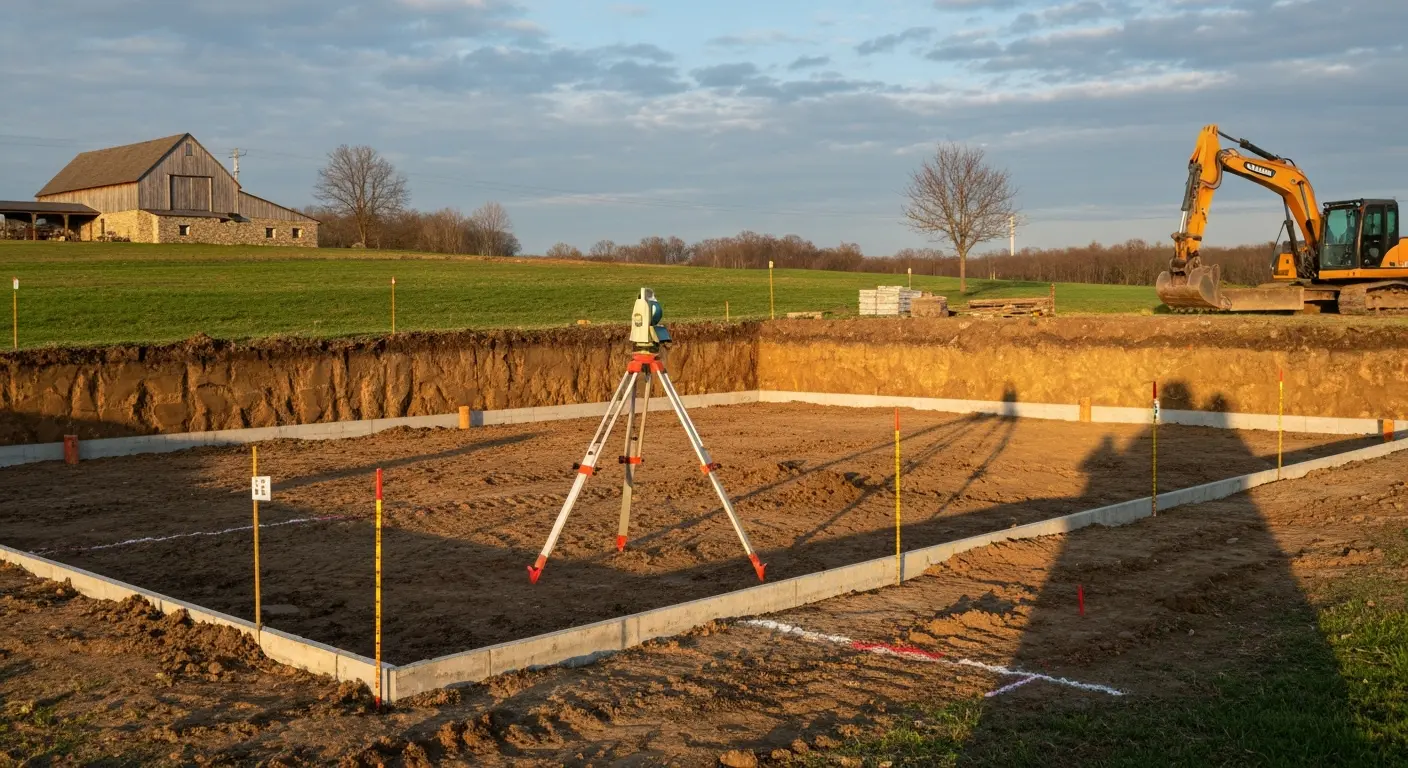
Site prep near Strasburg, PA—preparing foundation for residential build.
Stormwater System Installation
Lancaster enforces strict stormwater rules because of its historic combined sewer system in the city center. Outside the city, separate storm systems require proper infiltration beds and drainage lines. We install these systems to prevent flooding and meet Environmental Protection Agency standards.
- Infiltration beds and detention systems
- Underground drainage pipes and inlets
- Green infrastructure for stormwater management
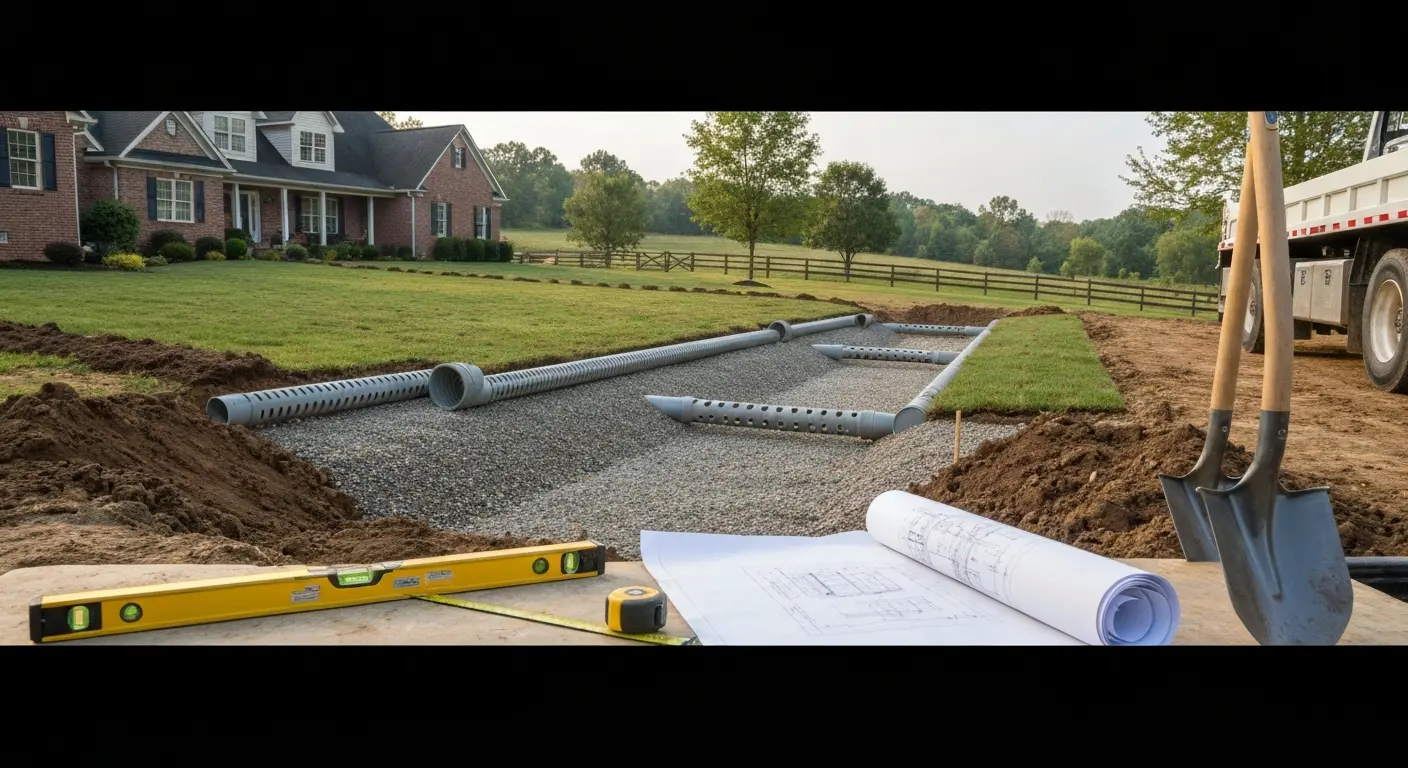
Infiltration system installed in Lancaster Township for stormwater compliance.
Septic System Installation & Repair
Rural and farmland properties across Lancaster County rely on septic systems. We install tanks, leach beds, and distribution lines to PA Department of Environmental Protection standards. Repair work restores failed systems before they damage property or groundwater.
- Septic tank placement and connections
- Leach bed design and installation
- System repair and replacement
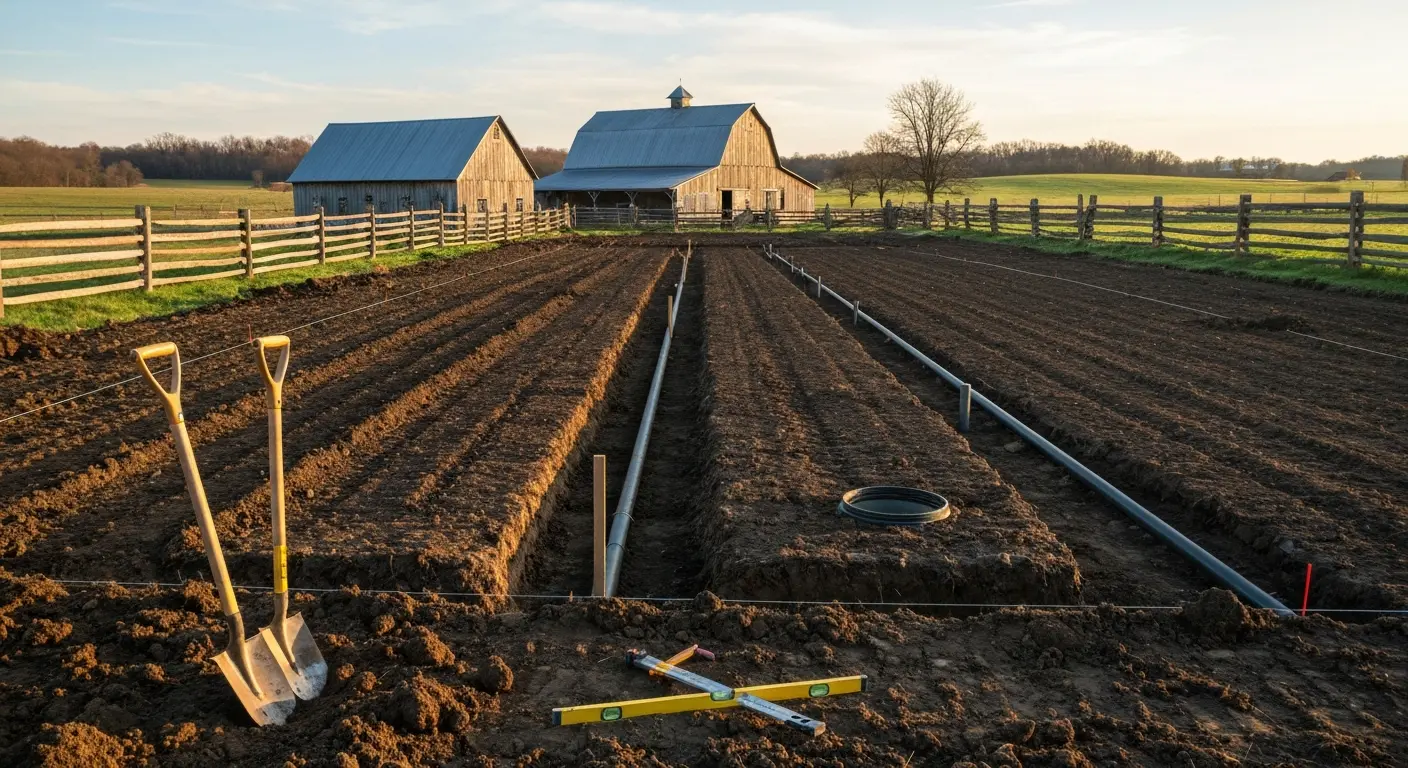
Septic installation in Amish farmland east of Lancaster, PA.
Ground Penetrating Radar (GPR)
Before digging, use GPR to locate buried utilities, pipes, and soil layers. This avoids costly hits to sewer lines, water mains, and electric conduits common in Lancaster's older neighborhoods. One scan saves thousands in damage and repair downtime.
- Utility and pipe detection
- Soil composition mapping
- Safe excavation planning

GPR scanning used to locate underground utilities before site work.
Why Local Expertise Matters
Lancaster Has Unique Rules
Lancaster's combined sewer system in the city center mixes stormwater with sewage. Outside the city, separate storm codes kick in. Knowing which rule applies to your block saves months of permitting back-and-forth and keeps your project on schedule.
Soil and Terrain Vary
Downtown Lancaster has clay and bedrock. Rural Amish farmland to the east is silt and sand. Each soil type demands different digging methods, drainage layouts, and compaction sequences. A contractor who knows the difference avoids rework and equipment damage.
Permit timelines in Lancaster can stretch 4–8 weeks. Starting early with a contractor who coordinates with the City or Township cuts delays and keeps costs predictable.
Inspection Standards
City and Township inspectors expect specific grades, compaction densities, and drainage setups. First-pass approval saves you from costly redo work. Experience with local inspectors means work gets signed off faster, and your build timeline stays intact.
Serving Lancaster & Nearby Areas
Excavating work happens across Lancaster County. Key service zones include downtown, farmland east, and townships on the edges.
Downtown Lancaster
Work near Central Market, the Fulton Theatre, and historic neighborhoods demands precision on tight sites. Parking and street access are tight. Combined sewer codes apply. Experience matters here.
Strasburg & Bird-in-Hand
Amish farmland and small-town lots. Septic systems are standard. Horse-and-buggy traffic is common, so site logistics and traffic control are essential. Respect for the community and careful land work are non-negotiable.
Lititz & Ephrata
Growing towns with mixed residential and commercial development. Stormwater management and drainage infrastructure are increasingly complex. Permit coordination with both town and County is routine.
Lancaster Township & Surrounding Areas
Rural properties, mixed septic and public sewer. Larger agricultural projects and long driveways. MS4 stormwater regulations govern separate storm systems. Long lead times for permits are common; planning ahead is critical.
Common Questions
How long does site excavation take?
Timeline depends on site size, soil type, and permit approval. A residential foundation excavation typically takes 2–5 days. Larger sites with complex drainage can take 2–4 weeks. Always add time for permit review and inspections.
Do I need a permit for site work?
Yes. Most earth disturbance in Lancaster City and Township requires a permit, especially if the work affects stormwater drainage. Always contact your local Municipality before starting work. Fines for unpermitted excavation can reach thousands of dollars.
What if you hit a utility line?
Always call 811 (the national Call Before You Dig line) to have utilities marked before excavation starts. If a line is struck, stop work immediately, notify the utility company, and document the incident. GPR scanning adds a safety layer to prevent accidents.
What's the difference between septic and public sewer work?
Septic systems serve rural properties without public sewer access. Tanks and leach beds must meet PA Department of Environmental Protection standards and are inspected and approved by the County. Public sewer work in cities like Lancaster connects to the City's treatment plant. Both require permits and inspections.
Why does Lancaster have strict stormwater rules?
Downtown Lancaster has a combined sewer system that can overflow during heavy rain, spilling sewage into the Conestoga River. New projects must manage stormwater on-site to reduce strain on this aging system. Outside the city, separate storm rules protect local creeks and groundwater.
DISCOVER WHAT OUR CUSTOMERS HAVE TO SAY ABOUT US
REVIEWS
proudly serving these areas
Annville, PA
Camp Hill, PA
Carlisle, PA
Dillsburg, PA
Enola, PA
Ephrata, PA
Etters, PA
Grantville, PA
READY TO take the next step?
get a free quote TODAY!
QUICK LINKS
our services
service areas
operating HOURS
Mon: 7:00 am - 4:00 pm
Tue: 7:00 am - 4:00 pm
Wed: 7:00 am - 4:00 pm
Thu: 7:00 am - 4:00 pm
Fri: 7:00 am - 4:00 pm
Sat: Closed - Closed
Sun: Closed - Closed